






How to Eat Healthily: Principles That Make Sense There are many conflicting recommendations about nutrition today. However, healthy eating doesn’t have to be complicated. The key is to understand the basic principles that are clinically sound and can be sustained over the long term.
Why is there so much confusion about nutrition today
People are talking about nutrition more today than ever before. On one hand, we hear that we should limit carbohydrates. Elsewhere, plant-based diets, intermittent fasting, high-protein meals, detoxes, keto, low-fat diets, or precise calorie counting are recommended. Every approach has its advocates and often compelling arguments.
As a result, many people no longer know what to believe. Sometimes fats are the problem; other times, sugars. Some recommend eating breakfast; others advise skipping it. Some claim that fruit is healthy, while others warn about fructose. In such an environment, healthy eating can seem complicated, strict, and full of restrictions.
In reality, however, it is not the extremes that work best, but the basic principles that recur across clinically proven dietary models. The Mediterranean diet, the DASH protocol, the low-glycemic approach, and an emphasis on sufficient protein differ in detail, but their common foundation is very similar: more natural foods, more fiber, sufficient high-quality protein, healthy fats, fewer ultra-processed foods, and more stable blood sugar levels. We therefore don’t needto view healthy eating as a diet. It’s more accurate to see it as a set of daily decisions that support metabolism, energy, hormonal balance, a healthy weight, skin quality, and healthy aging.
Instead of a diet: principles that work in the long term
Healthy eating isn’t about perfect discipline. It’s about consistency. What matters isn’t a single meal, but what appears in our diet most days.
The practical foundation consists mainly of:
- vegetables and plant-based fiber,
- high-quality protein,
- healthy fats,
- natural, minimally processed foods,
- an appropriate amount of carbohydrates based on metabolic tolerance,
- regularity without constant snacking,
- adequate hydration,
- respecting age, physical activity, health status, and goals.
Conversely, the most harmful factor is a long-term excess of ultra-processed foods, sweets, sugary drinks, alcohol, poor-quality fats, and foods with a high glycemic load. While these foods often provide quick taste satisfaction, they can also contribute to energy fluctuations, inflammatory processes, insulin resistance, weight gain, and worsening metabolic health.
The goal, therefore, is not to find a single universal diet for everyone. The goal is to understand the principles and know how to adapt them to your own body, daily routine, and stage of life.
Principle 1: Eat more natural foods
The Mediterranean diet is among the best clinically studied dietary patterns. It is not a short-term diet, but a natural eating pattern based on vegetables, olive oil, fish, legumes, nuts, whole grains, and an appropriate amount of high-quality protein.
It is suitable for people who want to support heart health, metabolism, a healthy weight, gut microbiome, and healthy aging. The advantage is that it does not require extreme restrictions and can be easily adapted to everyday life.
How to incorporate it into your daily diet
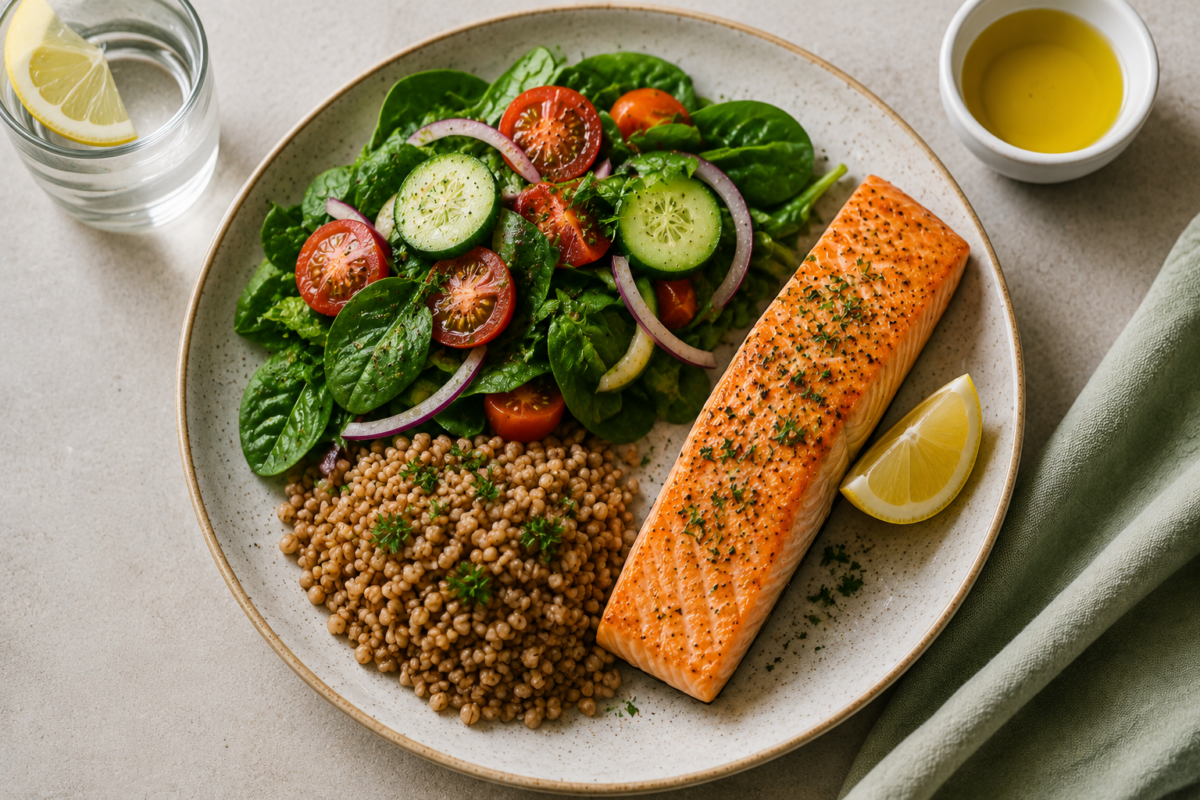
A simple plate can serve as a foundation:
- half the plate consists of vegetables,
- a quarter is a high-quality protein source,
- a quarter is a side dish with a lower glycemic load,
- plus a small amount of high-quality fat, such as extra virgin olive oil.
In practice, this could look like a salad with salmon, vegetables with eggs and sourdough bread, a chickpea salad with olive oil, or steamed vegetables with turkey and buckwheat.
Principle 2: Think about your heart, blood pressure, and blood vessels
Healthy eating isn’t just about weight. Heart health, blood vessels, and blood pressure are also very important. This is where the DASH approach really shines.
DASH is an abbreviation of the English name Dietary Approaches to Stop HypertensionDASH stands for Dietary Approaches to Stop Hypertension, meaning dietary approaches to reduce or control high blood pressure. It is not a fad diet, but a clinically proven dietary model that was originally created for people with high blood pressure or an increased risk of cardiovascular disease.
Its essence is relatively simple: the diet should provide more nutrients that support vascular health and blood pressure, while reducing the intake of substances that can worsen it. DASH therefore emphasizes foods naturally rich in potassium, magnesium, calcium, fiber, and high-quality protein. At the same time, it limits excess salt, smoked meats, instant meals, fast food, sweets, sugary drinks, and highly processed foods.
In practice, DASH recommends in particular:
- more vegetables and fruits,
- regular inclusion of legumes,
- whole-grain foods in moderate amounts,
- nuts and seeds,
- fish, poultry, and leaner sources of protein,
- fermented dairy products, if well-tolerated,
- less salt, smoked meats, convenience foods, and industrially processed foods.
It is important to note that DASH should not be viewed as a strict, standalone diet. It can be very well combined with the Mediterranean diet. The result is a diet rich in vegetables, fiber, olive oil, fish, legumes, and natural foods, while also paying closer attention to salt intake and food quality from the perspective of blood pressure.
In everyday life, DASH can mean simple changes: swapping processed meats for eggs, fish, or a legume spread; using herbs instead of excessive salt; incorporating more lentils, beans, or chickpeas; cooking more often with basic ingredients; and limiting ready-made meals.
This principle is particularly important for people who have high blood pressure, high LDL cholesterol, water retention, abdominal obesity, or a family history of cardiovascular disease. It is also useful as a preventive measure, because vascular health is built over the long term, not just when a problem arises.
Principle 3: Stabilize Blood Sugar Levels
Many people don’t eat particularly large amounts, yet they still experience energy fluctuations, sugar cravings, fatigue after meals, or weight gain—especially around the abdomen. In such cases, the problem may be a high glycemic load in the diet.
A low-glycemic protocol does not mean completely eliminating carbohydrates. It means choosing them more wisely, combining them with protein, fiber, and fats, and reducing the intake of foods that rapidly raise blood glucose levels.
Good sources of carbohydrates
Better choices include:
- vegetables,
- legumes,
- berries,
- oats,
- buckwheat,
- quinoa,
- potatoes or rice in moderate portions, ideally combined with protein and vegetables.
Less suitable options include sweets, white bread, sweetened beverages, juices, large portions of pasta without protein, and sweet breakfasts consisting solely of cereal or pastries.
A simple rule
Every main meal should contain protein, fiber, and healthy fat. Such a plate is more filling, reduces sharp fluctuations in blood sugar, and helps stabilize energy throughout the day.
Principle 4: Protect your muscles with enough protein
When it comes to healthy eating, people often talk about calories, fats, or sugars, but less about muscles. Yet muscle mass is one of the most important factors in metabolic health. Muscles help regulate glucose levels, support basal metabolism, improve physical performance, and are important for healthy aging.
As we age, it is therefore important to ensure adequate protein intake and regular exercise, especially strength or resistance training.
High-quality protein sources
You can include the following in your diet:
- eggs,
- fish,
- poultry,
- high-quality dairy products,
- Greek yogurt, kefir, or cottage cheese,
- tofu and tempeh,
- legumes,
- combinations of plant-based proteins.
The goal is not to eat excessive amounts of protein, but to include it regularly in every main meal. A breakfast consisting only of pastries and coffee is often insufficient. Better options include, for example, eggs with vegetables, yogurt with nuts and berries, or tofu with vegetables.
Principle 5: Give your digestion a rhythm, not extremes
Time-restricted eating—that is, eating within a specific time window—can be particularly helpful when you eat continuously from morning to night. The greatest benefit often comes not from fasting itself, but from the fact that evening eating stops, the number of random snacks decreases, and digestion gets more time to recover.
For most people, it’s safer to start gently:
- a 12-hour eating window,
- the last meal 2 to 3 hours before bed,
- no nighttime eating,
- no skipping protein.
Later, you can switch to a 10-hour window if it suits you. However, extremely long fasts aren’t suitable for everyone and shouldn’t replace quality meals.

How to Plan a Healthy Day
A healthy meal plan doesn’t have to be complicated. A simple, repeatable framework helps.
Breakfast
The goal is steady energy, not a quick sugar rush. Good options include eggs with vegetables, Greek yogurt with nuts and fruit, oatmeal with protein, or a savory breakfast bowl with vegetables and high-quality protein.
Lunch
Lunch should be primarily nutritious and filling. An ideal plate includes vegetables, protein, a moderate side dish, and healthy fats. For example, fish with vegetables and potatoes, chicken with salad and buckwheat, or a legume dish with olive oil.
Dinner
Dinner should be lighter but still nutritious. Good options include vegetables with protein, soup with legumes, fish with salad, or a fermented dairy product with nuts, if that suits you.
Between meals
If main meals are well-balanced, the need for snacks is often reduced. If a snack is needed, better options include a handful of nuts, kefir, fruit with yogurt, or vegetables with hummus.
Common mistakes in healthy eating
One of the most common mistakes is the idea that healthy eating must be very strict. Too many restrictions usually lead to fatigue, frustration, and a return to old habits.
Another mistake is a lack of protein. Many people prepare “light” meals that don’t fill them up and don’t preserve muscle mass. The result is hunger, sugar cravings, and overeating in the evening.
A common problem is also excessive intake of hidden sugars and ultra-processed foods. This applies not only to sweets but also to cereals, flavored yogurts, snack bars, sauces, baked goods, and ready-made meals.
And finally: healthy eating isn’t just about food. Sleep, stress, exercise, hormonal changes, medications, and daily routine also significantly influence the outcome.
Healthy Eating as Part of Metabolic Health
Metabolic health means that the body can work efficiently with energy. Blood sugar levels are more stable, insulin sensitivity is better, fat metabolism is more flexible, and energy levels throughout the day are more balanced.
Diet plays a key role in this. The most important factor is a combination of three principles:
- sufficient fiber,
- sufficient protein,
- lower glycemic load of meals.
When these three elements are combined with regular exercise and quality sleep, they create a solid foundation for a healthy weight, improved energy, and long-term vitality.
It is precisely in this context that targeted nutritional support can also have its place. The Skeeneffect® Natural Metabolic Health supplement is designed to support healthy metabolism, metabolic balance, and appetite control. It is best viewed as part of a broader regimen, not as a substitute for a healthy diet. It makes the most sense when combined with a diet rich in natural foods, sufficient protein and fiber, regular exercise, and quality sleep.
Its place, therefore, is not in the logic of “a pill instead of changing habits,” but rather in the approach: first, establish a solid foundation in your daily diet, and then specifically support it where the body needs help with metabolic balance, appetite, energy, or weight control.
Conclusion: Don’t get overwhelmed by trends
The best diet isn’t the one that’s currently the most popular. It’s the one that has a sound clinical basis, can be tailored to a specific person, and can be sustained long-term.
For most people, the best starting point is a simple combination: natural foods, plenty of vegetables and fiber, an adequate amount of high-quality protein, healthy fats, a lower glycemic load, and a regular meal schedule. For those with high blood pressure or cardiovascular risk, incorporating the DASH diet principles makes sense. For insulin resistance or energy fluctuations, a low-glycemic diet helps. And for healthy aging, it’s essential to focus on muscle mass, not just weight.
Healthy eating, therefore, isn’t about perfection or blindly following trends. It’s about daily decisions that are repeated often enough to produce results.
A brief practical summary
If you want to eat healthier, start with these steps:
- add vegetables to every main meal,
- make sure to include protein in every main meal,
- use high-quality fats, especially olive oil, nuts, and seeds,
- limit sweets, sugary drinks, and white bread,
- eat more legumes and fish,
- don’t eat right before bed,
- don’t underestimate strength training and sleep.
You don’t need to change everything at once. Just start with one step and repeat it every day.
Healthy eating is the foundation. When combined with exercise, quality sleep, and targeted nutritional support, we create a comprehensive approach to metabolic health, vitality, and healthy aging from the inside out.
If you want to support your metabolism in a more comprehensive way Skeeneffect® Natural Metabolic Health can be part of your daily routine. It works best as a supplement to a well-balanced diet, not as a replacement for it.