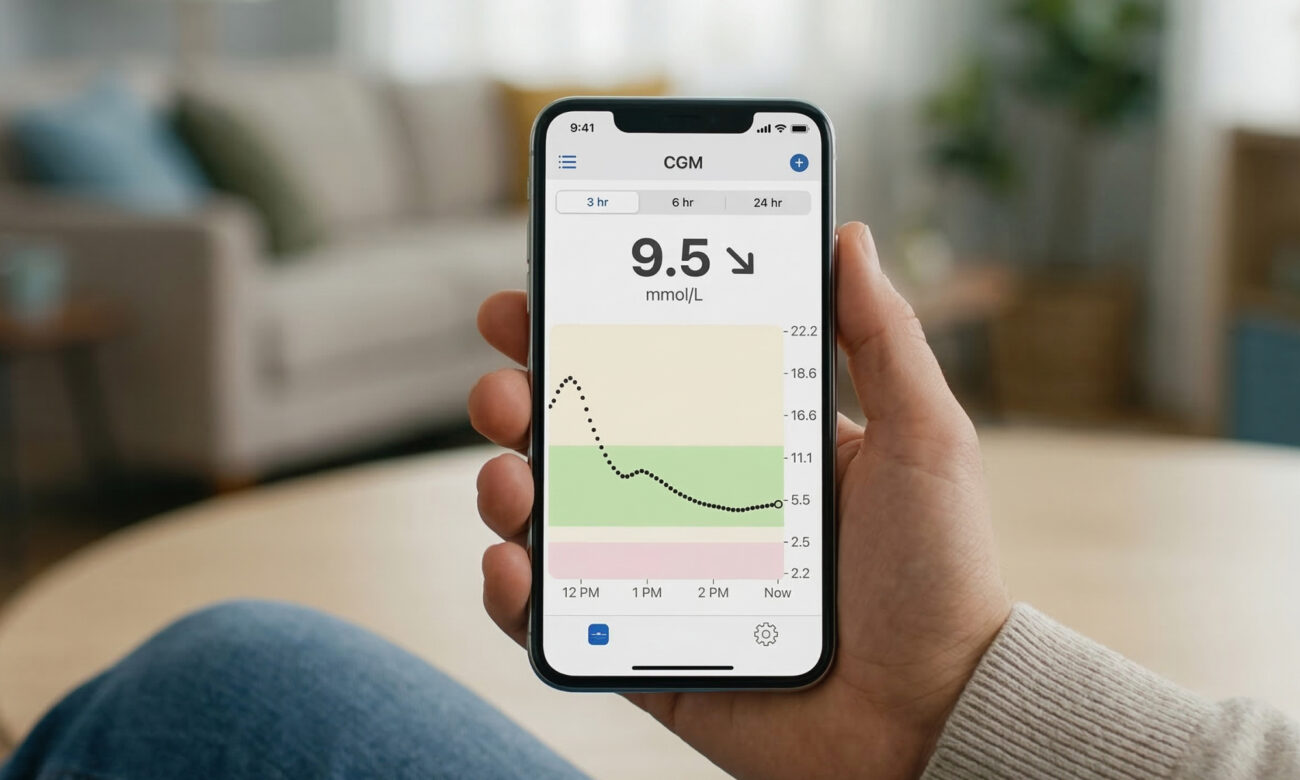









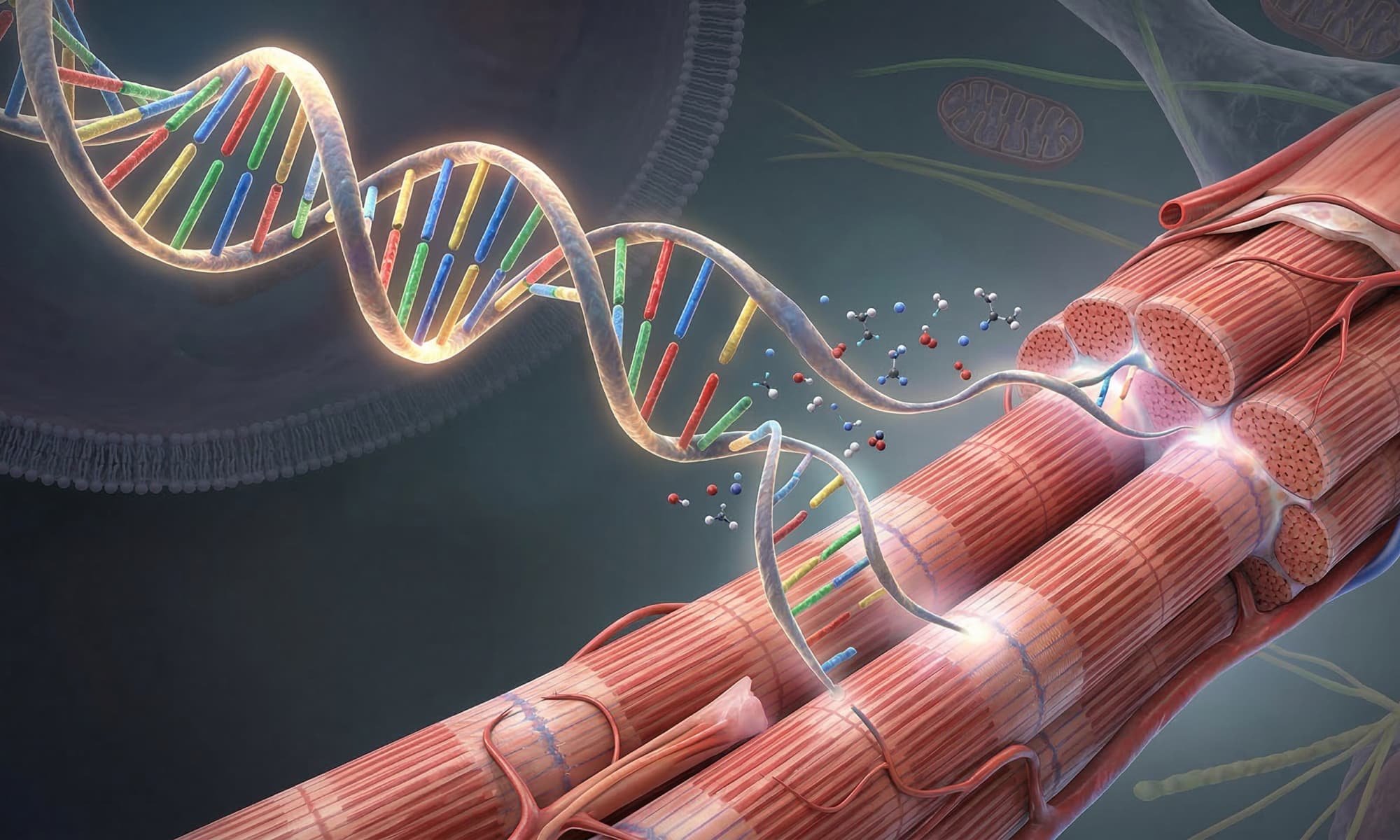
When people talk about blood sugar regulation, most people think of the pancreas and the hormone insulin. Less well known is that the biggest organ that actually decides how the body manages glucose is the muscles.
In fact, muscle tissue is the largest "consumer" of glucose in the body. This is why the analogy is often used that muscle acts as a metabolic sponge for sugarit can absorb large amounts of glucose from the blood and use it as a source of energy.
This mechanism plays a key role in the prevention of several metabolic diseases, including insulin resistance, type 2 diabetes and metabolic syndrome..
How muscles regulate blood sugar
When we eat, blood glucose levels naturally rise. The body responds by releasing insulin, which allows cells to take up glucose.
The biggest place where glucose is used is muscle tissueThe biggest place where glucose is used is GLUT4which allows glucose to enter the cell.
When the muscle is activated - for example, during physical activity - GLUT4 transporters move to the surface of the cell and allow glucose to enter the cell even without significant help from insulin.

Why muscle mass is important for metabolic health
The more muscle mass a person has, the greater their ability to use glucose efficiently.
Muscle is:
- consume glucose as an energy source
- store glucose as glycogen
- increase the sensitivity of cells to insulin.
If there is little muscle mass or the muscle is inactive for a long time, the body cannot process glucose efficiently. Glucose is then more easily converted into fat, often in the abdominal area.
This is one of the reasons why lack of exercise is associated with increased visceral fat,which is closely linked to metabolic diseases.
Movement as one of the most effective prevention tools
Regular physical activity is one of the most effective tools for promoting metabolic health.
Movement is:
- improves the sensitivity of cells to insulin
- increases the use of glucose by the muscles
- helps reduce visceral fat
- promotes the body's metabolic flexibility
Even brief muscular activity - such as brisk walking or strength training - can significantly improve the body's ability to regulate blood sugar levels.
Metabolic flexibility: the ability to burn both sugar and fat
A healthy metabolism is characterised by the body's ability to switch efficiently between different energy sources.
In a state of abundant energy, the body uses more glucose, while in between meals or during physical activity it burns fat.
This ability is referred to as metabolic flexibility. Regular exercise and sufficient muscle mass are some of the most important factors that support it.
Metabolic health is the basis of biological resilience
In recent years, there has been increasing talk that metabolic stability is the foundation of long-term health.
A stable metabolism means that the body can:
- maintain stable glucose levels
- manage energy efficiently
- minimise fat storage in the abdominal area
Promoting metabolic balance, therefore, involves a combination of factors - exercise, a good diet, sleep and in some cases the use of bioactive substance that support metabolic processes. správnemu fungovaniu metabolizmu.
These mechanisms are the focus of Skeeneffect® Natural Metabolic Health, which contains natural bioactive substances that support metabolic stability and the regulation of energy metabolism.
Metabolic health, muscle activity and joint health form one biological system.
In an active lifestyle, it is important to think not only about muscles, but also about supporting joints and cartilage, for example, through substances that contribute to the regeneration of joint structures.
Such an approach is the basis of the Synovialis Activewhich has been developed to support the structural integrity of joints during active movement.
Muscle activity also promotes joint stability and function. This is because muscles not only move the joints, but also stabilise and protect them from excessive mechanical loads. In addition, movement stimulates the circulation of synovial fluid, which nourishes the cartilage and helps maintain its elasticity.
If muscle activity is low, the body is less able to manage glucose, which can lead to metabolic imbalances and increased fat storage, especially in the abdominal area. At the same time, the mechanical stimulation of the joints and their nutrition is reduced, which can gradually affect the quality of cartilage and the function of the musculoskeletal system.
Metabolic stability, muscular activity and the structural integrity of the joints are interrelated processes that together form the basis of the body's biological resilience.
"Muscle drives metabolism, movement nourishes the joint, and metabolic balance keeps the whole system in harmony."